THE FOURIER LECTURE
FOURIER AND THE DEPRESSURIZED CONDUCTION COOL-DOWN OF A MICRO MODULAR REACTORProf CG du Toit Ph.D., Pr.Eng. – Emeritus DSI/NRF SARChI Chair in Nuclear Engineering, North-West University, South Africa

02 – 07 AUGUST 2026
RIO DE JANEIRO | BRAZIL18th INTERNATIONAL HEAT TRANSFER CONFERENCE


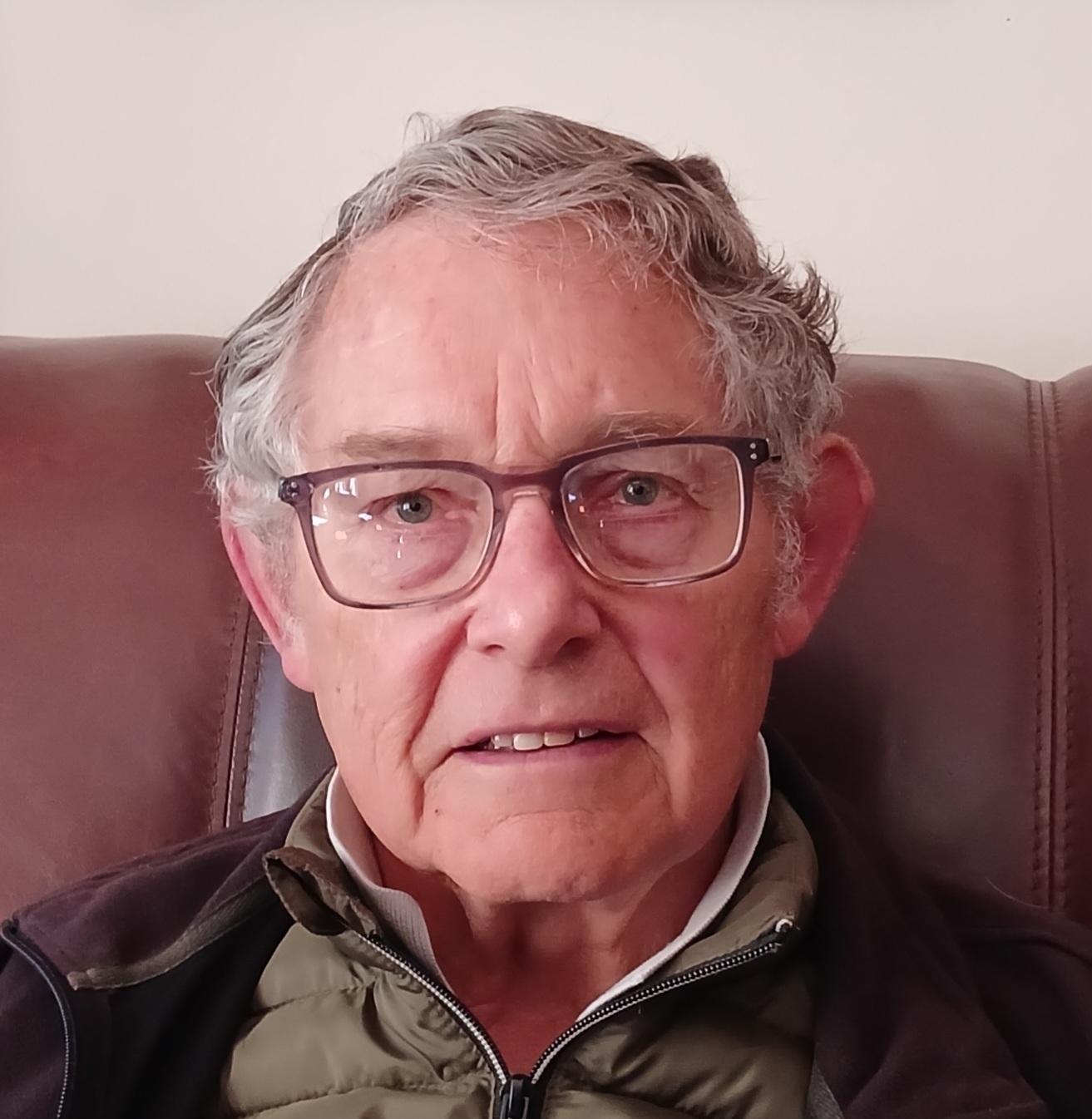
Prof CG du Toit Ph.D., Pr.Eng. – Emeritus DSI/NRF SARChI Chair in Nuclear Engineering, North-West University, South Africa
Abstract
The Advanced Micro Reactor is a high temperature gas-cooled prismatic block reactor, being designed to produce 10 MW thermal power. The active core consists of an inner graphite reflector, fuel graphite block assemblies arranged in three rings and an outer graphite reflector. The system code Flownex SE has been used to set up an axi-symmetric network model of the reactor to study the thermal-hydraulic behaviour of the reactor under steady-state conditions and during a Depressurized Loss of Forced Cooling event. The helium coolant enters the reactor through the outer annulus of a co-axial duct, flows up in the risers in the outer reflector to the upper plenum, down through the core and exists the lower plenum through the inner pipe of the co-axial duct. Under steady-state conditions the top of the core is cooler than the bottom of the core. During the depressurized loss of forced cooling the reactor endeavours to heat up the upper part of the core, cool down the lower part of the core and set-up the required temperature gradient in the radial direction to remove the decay heat and the excess heat accumulated in the solids. When the depressurized loss of forced cooling starts and the reactor is scrammed, the fuel temperatures drop steeply, along with the drop in power, until they are in equilibrium with the corresponding graphite temperatures and then follow the graphite temperatures as the decay heat decreases and the graphite heats up or cools down. The heating and cooling of the core is demonstrated by the rates at which the fuel and solids accumulate and release heat during the depressurized loss of forced cooling. A study of the heat balance during the depressurized loss of forced cooling also shows that a large of the heat rejected by the reactor cavity cooling system is due to the stored heat being released by the solids. The movement of the heat through the reactor is primarily determined by thermal conduction heat transfer (Fourier) assisted by radiation heat transfer (Stefan-Boltzmann) and convection heat transfer (Newton).
Short Bio
Jat du Toit is an emeritus professor of Mechanical Engineering and the emeritus DSI/NRF SARChI Research Chair in Nuclear Engineering at the North-West University, Potchefstroom, South Africa. He obtained a B.Eng. (Hons.)(Civil) and a M.Eng.(Civil) from the University of Stellenbosch and a Ph.D. from the University of Cambridge. He has published more than 100 papers in international and national journals and conference proceedings and was the co-editor of the proceedings of two conferences. He is a registered professional engineer with practical experience in the fields of civil, mechanical, chemical, metallurgical, and nuclear engineering and focuses on the numerical modeling of thermal-fluid processes. He is a partner of the commercial engineering software development and consulting firm M-Tech Industrial which develops and markets the system CFD code Flownex SE. His current interests are the development of advanced thermal-fluid simulation models for high temperature gas-cooled nuclear reactors and associated cooling systems using a systems CFD approach. He has been a senior technical consultant for the Pebble Bed Modular Reactor (PBMR) project. Along with his colleagues he has made contributions on the influence of the packing structure of pebble bed on the thermal-hydraulic phenomena, as well as the interaction between the reactor unit and the reactor cavity cooling system for pebble bed reactor and prismatic block reactor-based systems. He has served as President of the South African Association for Theoretical and Applied Mechanics and as Secretary of the Assembly for International Heat Transfer Conferences.
Masahiro Nomura – Institute of Industrial Science, The University of Tokyo
The Nukiyama Memorial Award has been established by the Heat Transfer Society of Japan to commemorate outstanding contributions by Shiro Nukiyama as an excellent heat transfer scientist. Nukiyama addressed the challenges of boiling phenomena and published a pioneering paper which clarified these phenomena in the form of the Nukiyama curve (boiling curve). This epoch-making work was done in 1930s, when heat transfer research was in an early stage and Nukiyama himself was young, under forty years old. The Nukiyama Memorial Award is bestowed to a scientist under/ about fifty years of age, once every two years in the field of Thermal Science and Engineering. The recipient of the Nukiyama Memorial Award 2026 is Prof. Masahiro Nomura.
Abstract
Heat conduction control in a semiconductor membrane by nanostructuring will be discussed from the viewpoint of photonics. We classify the systems by similarity, difference, and hybridization of photons and phonons, and explain characteristic thermal phonon transport in each system. Prospects for thermal phonon engineering will be also discussed.
Light propagation in ray optics and thermal phonon transport at the nanoscale are similar due to ballisticity. The characteristic propagation of light and mechanical vibrations in band-engineered periodic structures, i.e. photonic and phononic crystals, derives from the wave properties of electromagnetic and elastic waves. Some recent work on the control of heat conduction by well-designed nanostructures has been taken up to discuss how we can design nanostructures to control heat transport more effectively by considering the similarity and difference of photons and thermal phonons [1]. The ballistic behavior of phonons in their mean free path (MFP) allows advanced heat flux control such as directional heat flux and heat focusing. This thermal phonon behavior is similar to ray optics and is therefore named “Ray phononics” [2]. The selection of phonon k-vector direction by aligned nanoholes formed in a membrane result in the formation of directional heat flux. The directional heat flux is maintained within the MFP of thermal phonons. The interaction and hybridization of photons and phonons are also interesting and will lead to new functionality. Phonons can control the emission of a single photon from a quantum dot embedded in a high-Q optical micro/nanocavity [3, 4].
Regarding hybridization, phonons can travel faster by four orders of magnitude by shaking hands with photons: forming surface phonon polaritons (SPhPs) leading to the enhancement of thermal conduction in thin dielectric membranes. This dramatic change in thermal energy transport property by SPhPs opens new possibilities for thermal management in thin membranes [5]. The hydrodynamic behavior of phonons is an example of a different transport phenomenon that is a phenomenon rarely observed in optics. The collective behavior, which exists in electronic and phononic systems due to interaction, of phonons provides interesting thermal transport such as phonon Poiseuille flow [6]. We demonstrate the first thermal Tesla valve [7], thermal diode, as an example of applications.
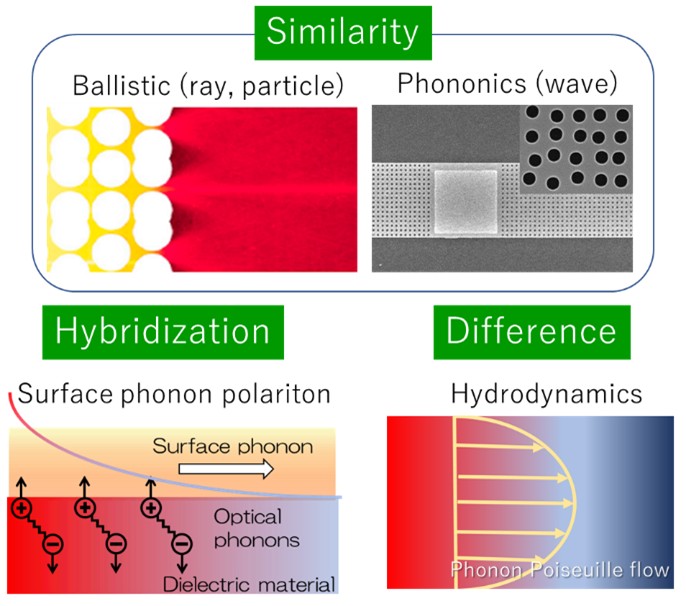
Figure 1. Discusses thermal phonon transport, categorizing photon and phonon similarities, differences, and hybridization.
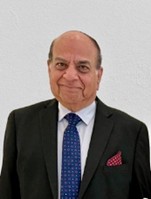
Yogesh Jaluria – Rutgers, The State University of New Jersey
The William Begell Medal, For Excellence in Thermal Science and Engineering was established in 2010 by The Assembly for International Heat Transfer Conferences, AIHTC, International Centre for Heat and Mass Transfer, ICHMT, and Begell House Inc. to award an individual, from among those selected to deliver Keynote lectures at the IHTC Conferences, who is held in high regard by the heat transfer community for his/her contributions and excellence in thermal science and technology and whose IHTC Keynote paper is judged to make a profound contribution to the thermal science and engineering literature. In 2023, the Award Steering Committee amended the William Begell Medal to be bestowed upon an internationally recognized, highly-accomplished researcher and leader in fundamentals or applications of thermal sciences and engineering based on lifetime achievements. The recipient of the William Begell Medal Award 2026 is Prof. Yogesh Jaluria.
Abstract
Nature is fascinating, enchanting, and often mysterious. The beauty of softly falling snow, the warmth of the Sun on cold wintry days, intoxicating evening breeze in the summer, and raindrops falling on our roofs are among the many lovely ways in which we see our natural world. Nature can also be bewildering and terrifying. This includes natural events ranging from earthquakes, hurricanes, tsunamis, and tornadoes that can cause widespread destruction to droughts, floods, mudslides, forest fires, snowstorms, and many other extreme weather conditions that can affect millions. Nature has amazing power and can disrupt the lives of all those who inhabit this lovely planet. Interestingly, thermal energy transport is behind much of what we observe in Nature. We receive much of our energy from the Sun and reject energy to space, resulting in an annual periodic variation in heat transfer to and from the Earth. An energy imbalance would lead to global warming, which has been a growing concern in recent years. Temperature and moisture concentration differences in Earth’s gravitational field drive most of the flows that we observe in the atmosphere and in the lakes and oceans. Temperature differences also generate flows that give rise to Earth’s magnetic field that deflects the stream of charged particles from the Sun and helps preserve our atmosphere. Heat transfer is also behind the movement of tectonic plates, earthquakes and volcanoes. Wildfires are obviously driven by combustion and are thus closely linked with heat transfer. Similarly, heat transfer plays a critical role in determining our weather and climate. All living creatures are affected by thermal energy, and evolution has equipped them with the means to cope with weather extremes. We are familiar with plants and trees bending to catch greater amount of sunlight. The thermal cycle experienced by lakes and rivers as well as hot springs and geysers also depend on the thermal transport. These and many other natural phenomena that we enjoy or are concerned about have heat transfer as a primary driver.
Similarly, many technological advancements have been driven by heat transfer processes. From heating, air conditioning, cars and airplanes to manufacturing, food processing, and thermal management of electronic system, heat transfer is at the very core of the systems involved. We cannot talk about data centers without discussing their cooling. Thermal processing is critical in
a wide range of materials like food, polymers and steel. Power plants as well as renewable energy systems are largely driven by heat transfer processes. In many cases, we have a strong coupling between natural processes and technology, for instance, in heat rejection, thermal pollution and climate change. Data center cooling could be linked with environmental conditions for more effective thermal management. Many of the advancements in new and emerging materials and devices are also driven by thermal transport processes. Many other important processes and systems can be mentioned where thermal energy transport is critical to the quality of the resulting product and process efficiency. This talk focuses on the wide-ranging impact of heat transfer in driving natural phenomena as well as technological innovation and advancement. The basic mechanisms by which heat transfer drives the flows in nature or sustains various systems in technology are discussed. The link between natural phenomena and technology is examined with respect to areas like climate change, thermal pollution, energy extraction, safety and sustainability. Nature-based design and optimization are critical in many cases and are discussed.
Short Bio
Dr. Yogesh Jaluria is Board of Governors Professor and Distinguished Professor at Rutgers, the State University of New Jersey. His research work is in the field of thermal science and engineering, covering areas like convection, fires, materials processing, thermal management of electronics, energy, and environment. He is the author/co-author of 10 books and the editor/coeditor of 18 books. He has contributed over 600 technical articles, including over 230 in archival journals and 22 book chapters. He has received several awards and honors for his work, such as the prestigious 2020 Holley Medal from the American Society of Mechanical Engineers (ASME) for pioneering achievements in optical fiber drawing, 2010 A.V. Luikov Award from the International Center for Heat and Mass Transfer (ICHMT) in recognition of outstanding work done over his career, the 2007 Kern Award from the American Institute of Chemical Engineers (AIChE), the 2003 Robert Henry Thurston Lecture Award from ASME, and the 2002 Max Jakob Memorial Award, the highest international recognition in heat transfer, from ASME and the AIChE. He received the 2000 Freeman Scholar Award and the 1995 Heat Transfer Memorial Award from ASME. He has served as Department Chairman and as Interim Dean of Engineering. He served as Editor-in-Chief of the Journal of Heat Transfer and as Editor of Computational Mechanics. He currently serves as Editor of Annual Review of Heat Transfer. He is an Honorary Member of ASME, and a Fellow of AAAS, ASTFE and APS. He served as the President of the American Society of Thermal and Fluids Engineers (ASTFE) from 2014 to 2019.

M. Pinar Mengüç – Director, Center for Energy, Environment and Economy (CEEE/EÇEM) Özyeğin University, Istanbul, Türkiye
A Luikov Medal is awarded by the International Centre for Heat and Mass Transfer – ICHMT for outstanding contributions to the science and art of Heat and Mass Transfer and for activities in international scientific cooperation in conjunction with ICHMT programs.
Abstract
Transport formulations have long provided a rigorous framework for describing how energy carriers propagate, interact, attenuate, scatter, and redistribute across space and time. From Fourier’s diffusion equation to Boltzmann’s kinetic theory and the radiative transfer equation, the central concern has been to connect microscopic or directional interactions with observable macroscopic behavior. This connection is especially important when such processes are coupled through material structure, boundary conditions, irreversible interactions, and external fields.
This lecture follows a personal scientific path from radiative transfer and light scattering research carried out by the author and his groups over many years toward broader transport-based descriptions of complex systems. In participating media, radiative transfer is expressed through an integro-differential formulation. Related equations arise for carriers such as electrons, phonons, and neutrons. Although the carriers may differ, their interactions can often be interpreted through transport formulations rooted in Boltzmann’s kinetic description.
Examples from past research, including optical diagnostics for particle characterization, micro- and nanoscale heat transfer, near-field radiation, light–matter interaction in structured media, and electron-beam processing, will be used to show how transport thinking can connect measurement, modeling, and material response. In reacting and multiphase systems, light scattering can be used to determine particle size, shape, concentration, and morphology. At small length scales, coherence, resonance, tunneling, and near-field coupling modify classical radiative exchange. In electron-beam processing and nanoscale fabrication, localized energy deposition requires coupling between electron transport, phonon response, and evolving material structure. These examples show how transport formulations can move across scales while retaining a common mathematical discipline.
The lecture will then address a broader question: can transport theory be extended to open complex systems? Many systems of current interest are multiscale, history-dependent, and organized through evolving interfaces. Their behavior is not always governed by a single conserved physical carrier. Instead, cascaded exchanges take place among multiple carriers and domains. Such systems may also involve memory effects, boundary-mediated coupling, and sources or sinks that do not fit classical equilibrium closures. Technological networks, built environments, ecosystems, cities, and coupled socio-technical systems exhibit such behavior.
The lecture will conclude with a brief discussion of Open Cascaded Transport, proposed as an extension of transport-based formulations to coupled, open, and history-dependent systems. The purpose of this new approach is to examine whether concepts developed for the transport of energy and matter can also help analyze how organized structure is transmitted, transformed, and sometimes sustained in complex systems beyond the traditional boundaries of the field.
Short Biography
M. Pinar Mengüç is FYE Endowed Chair Professor at Özyeğin University, Istanbul, where he is also the founding Director of the Center for Energy, Environment and Economy (CEEE/EÇEM). He received his PhD in Mechanical Engineering from Purdue University in 1985 and joined the University of Kentucky that same year, becoming a full professor in 1993. He was later appointed Engineering Alumni Association Chair Professor at the University of Kentucky. In 2009, he joined Özyeğin University as the founding Head of Mechanical Engineering and established CEEE/EÇEM. He has held visiting appointments at the Università degli Studi di Napoli Federico II, Harvard University/Massachusetts General Hospital, and the University of California, Los Angeles.
His research interests include radiative transfer, light scattering, inverse radiation problems, optical diagnostics, particle characterization, near-field thermal radiation, nanoscale energy transport, electron-beam transport, and sustainable energy systems. His work has contributed to radiation transport modeling in participating media, inverse characterization of particles and complex media, transport-based analysis of photons, phonons, and electrons, and applications of thermal sciences to energy and environmental systems.
Professor Mengüç has authored or co-authored more than 160 journal articles, more than 240 conference papers, seven books, and several patents. He has supervised more than 70 MS, PhD, and postdoctoral researchers and has delivered more than 140 invited, keynote, and plenary lectures. From 2006 to 2024, he served as one of the Editors-in-Chief of the Journal of Quantitative Spectroscopy and Radiative Transfer. He is a Fellow of ASME and ICHMT, a member of the Science Academy of Türkiye, and has served in executive roles in several scientific and professional organizations, including the Science Academy and ICHMT.
His honors include the 2018 ASME Heat Transfer Memorial Award, the 2020 Purdue University Outstanding Mechanical Engineer Award, the 2023 Michael I. Mishchenko Medal, the 2024 METU Parlar Foundation Honor Award, and the A.V. Luikov Medal of the International Centre for Heat and Mass Transfer.